 Download PDF· Rev 2.0.3
User Manual
EarthGuard
Single-Channel Insulation Monitoring Device
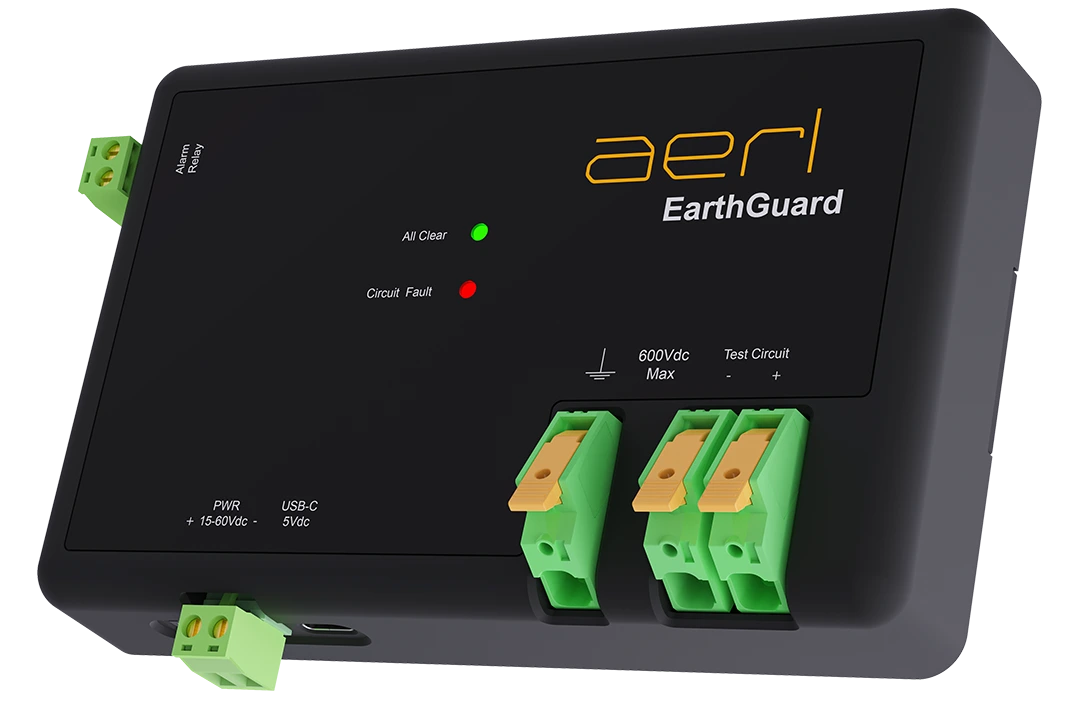
EG-600-SC
Installation & OperationAER12-SC Rev 2.0.3, 8 Nov 2026
Download PDF· Rev 2.0.3
User Manual
Single-Channel Insulation Monitoring Device
Australian Energy Research Laboratories (AERL) was founded in 1985 by Stuart Watkinson to commercialise the Power Optimizer, which he developed while studying at the University of Queensland. It became the AERL MAXIMIZER™, a universal maximum power point tracker (MPPT).
Today AERL designs, integrates and supports power conversion, lithium energy storage, monitoring and earth-fault detection products for commercial, industrial and off-grid energy systems, including oil and gas, mining and telecommunications sites.
Australian Energy Research Laboratories
1/75 Bluestone Circuit
Seventeen Mile Rocks QLD 4073
Australia
Unless specifically agreed to in writing, AERL Pty Ltd:
(a) Makes no warranty as to the accuracy, sufficiency or suitability of any technical or other information provided in its manuals or other documentation.
(b) Assumes no responsibility or liability for loss or damage, whether direct, indirect, consequential, or incidental, which might arise out of the use of such information.
The use of any such information will be entirely at the user’s risk.
EarthGuard EG-600-SC User Manual © 2026 AERL Pty Ltd. All rights reserved.
AERL and the AERL logo are trademarks owned by AERL Holdings Pty Ltd and used by AERL Pty Ltd under licence. These trademarks may be registered in Australia and other countries.
This manual contains important safety information and installation instructions for the EarthGuard EG-600-SC insulation monitoring device. It uses the following symbols for important operating information and potentially dangerous conditions.

Information you must follow for the EarthGuard to operate correctly.

A procedure that is critical to installing the EarthGuard safely. Take extreme care when you perform it.
The installation must comply with the electrical standards, codes and wiring rules in force at the site, and must be done by an installer accredited or licensed in your jurisdiction. Standards cited in this manual reflect the design intent at publication; where your current local standards differ, follow them.
This manual covers EarthGuard EG-600-SC firmware v1.0.4 and later.
| Warranty requirements | Total duration |
|---|---|
| You are the original purchaser of the EarthGuard. | 2 years |
The warranty starts 30 days after AERL dispatches the EarthGuard.
Our goods come with guarantees that cannot be excluded under the Australian Consumer Law. You are entitled to a replacement or refund for a major failure and compensation for any other reasonably foreseeable loss or damage. You are also entitled to have the goods repaired or replaced if the goods fail to be of acceptable quality and the failure does not amount to a major failure.
Full terms: AERL warranty statement for the EarthGuard EG-600 and EG-600-SC, aerl.com.au.
Register your EarthGuard at aerl.com.au/warranty-registration. Registration does not change the 2-year warranty.
| Parameter | Typical |
|---|---|
| Weight | 250 g |
| Dimensions (W × H × D) | 155 × 100 × 35 mm |
| Enclosure type | Indoor Type 1 / IP20 |
| Operating temperature | −25 to 60 °C |
| Storage temperature | −25 to 80 °C |
| Connection terminals (Test & Earth) | Lever push-in · 0.2–10 mm² (22–8 AWG) |
| Parameter | Value |
|---|---|
| Input power (DC input) | 12–60 Vdcfit the BATT/PSU jumper for a 12–15 Vdc supply |
| Input power (USB-C) | 4.5–5.5 Vdc |
| Max power consumption | 2 W |
| Alarm indication relay | 1 × signal (dry contact) |
| Parameter | Value |
|---|---|
| Voltage range | 40–600 Vdc |
| Leakage trip thresholds (±10%) | 30 kΩ → 100 kΩ |
| Isolation to LV side | 4 kV (transient) |
| Domain | Standard |
|---|---|
| Electrical Safety | AS/NZS 3100:2017 |
| EMC | AS/NZS 61000.6.3:2012 |
The EarthGuard EG-600-SC is intended for use in installations designed in accordance with the relevant installation standards in the jurisdiction of use, including (in Australia/New Zealand) AS/NZS 3000, AS/NZS 5033, and AS/NZS 5139.
Thank you for purchasing an AERL EarthGuard EG-600-SC.
The AERL EarthGuard EG-600-SC is a single-channel insulation monitoring device. It continuously monitors the insulation of one PV string or battery bus. It is designed to support compliance with the earth fault and insulation monitoring requirements of AS/NZS 5033 (PV arrays), AS/NZS 5139 (battery systems) and other applicable local standards when installed to this manual and those standards. It has an audible and visual alarm and a relay output for external fault notification.
The EarthGuard uses resistive earth fault detection. Installed on the battery bus, it covers both the battery bank and the PV array in systems with common-positive or common-negative regulators.
It injects a small test current between the system conductors and earth and measures the resistance. Healthy insulation has a high resistance. When insulation deteriorates or a fault occurs, the resistance falls; when it falls below the configured threshold, the EarthGuard raises an alarm.
In common-positive and common-negative systems the PV array and battery bank share a conductor, so one EarthGuard on the battery bus detects insulation faults in both the battery and PV array circuits.
Non-isolated systems (for example, common-positive or common-negative solar regulators): because the battery bank assumes the PV array’s earth-fault potential, a single EarthGuard installed on the battery side can typically provide coverage for both the battery and the PV array circuits. Confirm this is acceptable under your applicable standard.
Galvanically isolated systems: detection requirements differ depending on the decisive voltage class of the battery side; refer to your applicable installation standard and PCE manufacturer documentation.
The EarthGuard monitors DC buses from 40 to 600 Vdc: 48 V battery systems up to 600 V PV arrays.
All AERL products are verified compatible with the EG-600-SC. Some third-party devices exceed the permissible leakage and trigger a fault as soon as the EarthGuard powers up.
Check the device’s earth-leakage specification before installation. If the EarthGuard reports a fault at power-up with no insulation fault present, contact AERL.
Install the EarthGuard in a clean, dry location, out of direct sunlight and away from moisture.
Fix the EarthGuard to a vertical surface through the mounting holes in the chassis.
Use hardware that suits the surface. Check that the unit is level and every mounting point is secure.
Wear suitable personal protective equipment (PPE) near live connections, and disconnect all power sources before you change any wiring.
Supply the EG-600-SC’s 12–60 Vdc input from a current-limited AC–DC or DC–DC power supply. Do not connect it directly to a battery or any other source that is not current-limited: a fault could draw enough current to cause damage or a fire.
For a 12–15 Vdc supply, fit the BATT/PSU jumper. It bypasses the input inrush limiter (marked ICL B/P on the circuit board).
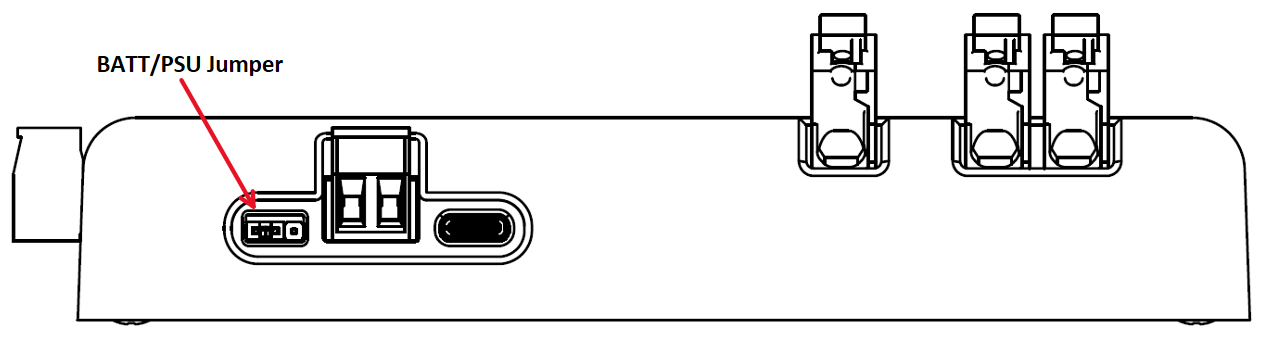
| BATT/PSU jumper | Input range |
|---|---|
| Removed (default) | 15–60 Vdc supply |
| Fitted | 12–15 Vdc supply |
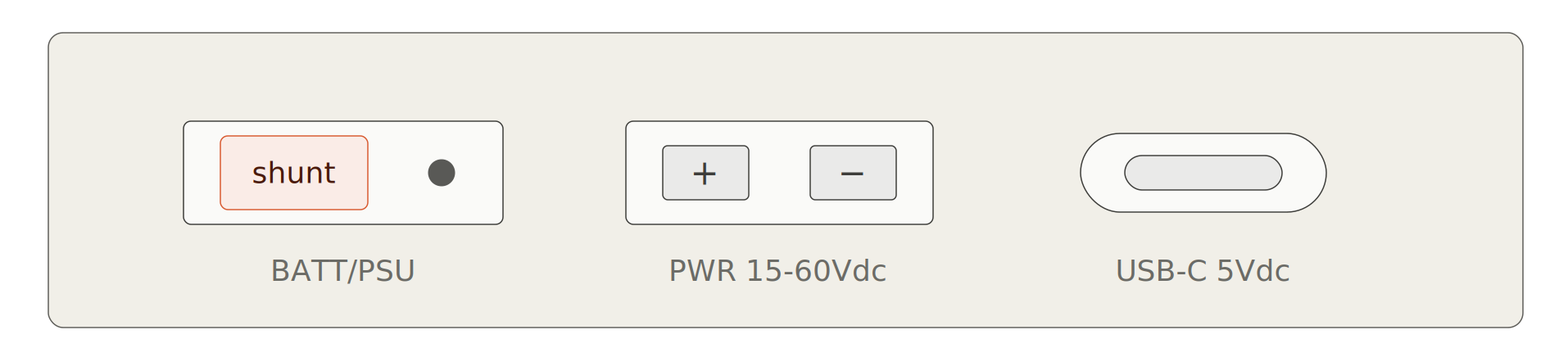
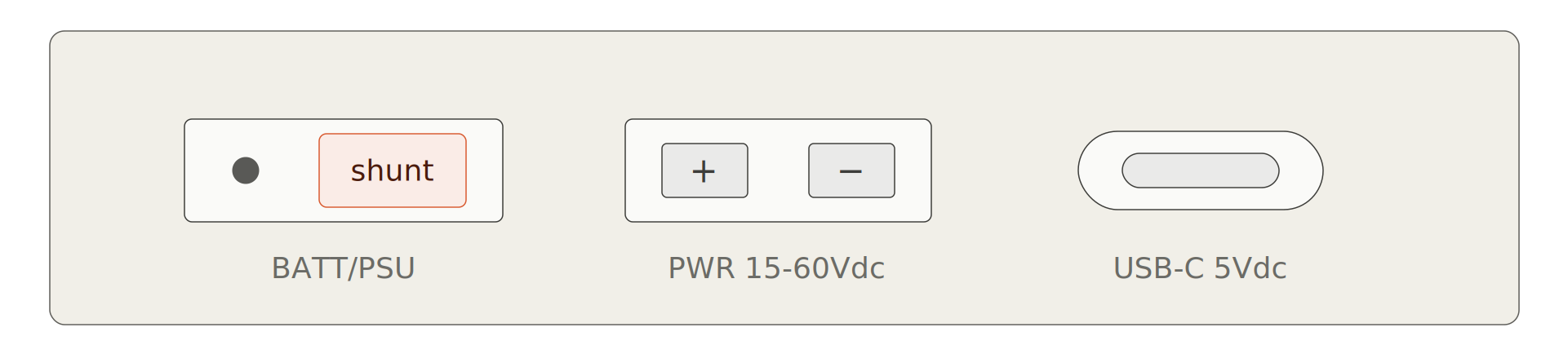
Do not fit the BATT/PSU jumper on a supply above 15 Vdc: it damages the unit or arcs the supply contacts when the supply is connected.
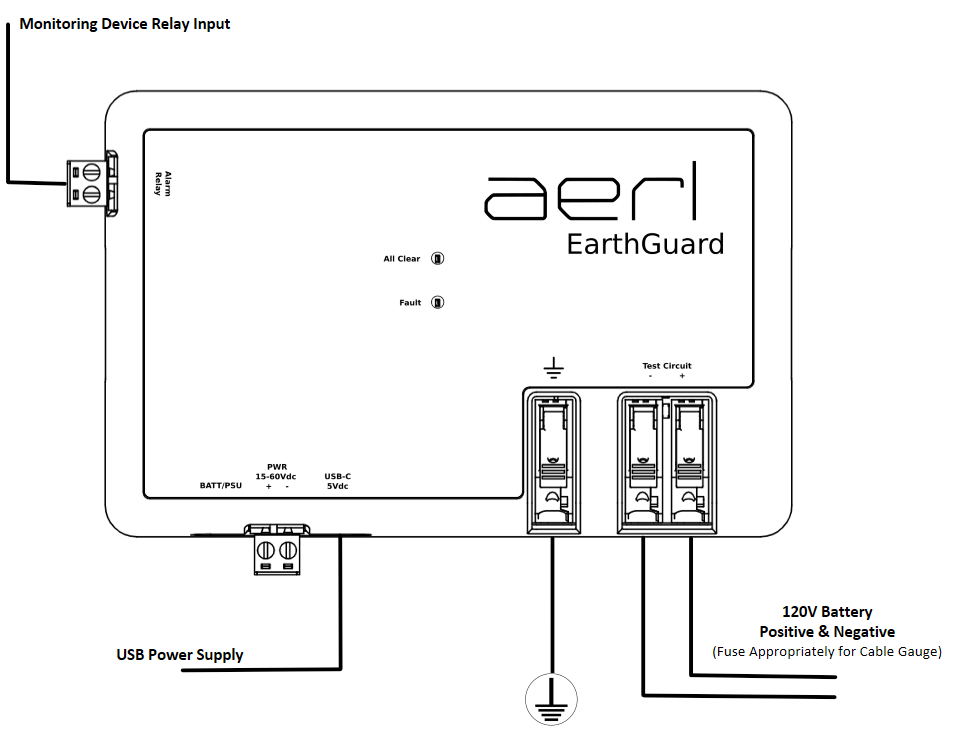
Figure 1 shows an example wiring configuration.
Connect a PC to the USB-C port and use AERL Link to view measurements, set the sensitivity and update the firmware.
AERL Link runs on Windows 10 and 11. Download it from the address below.
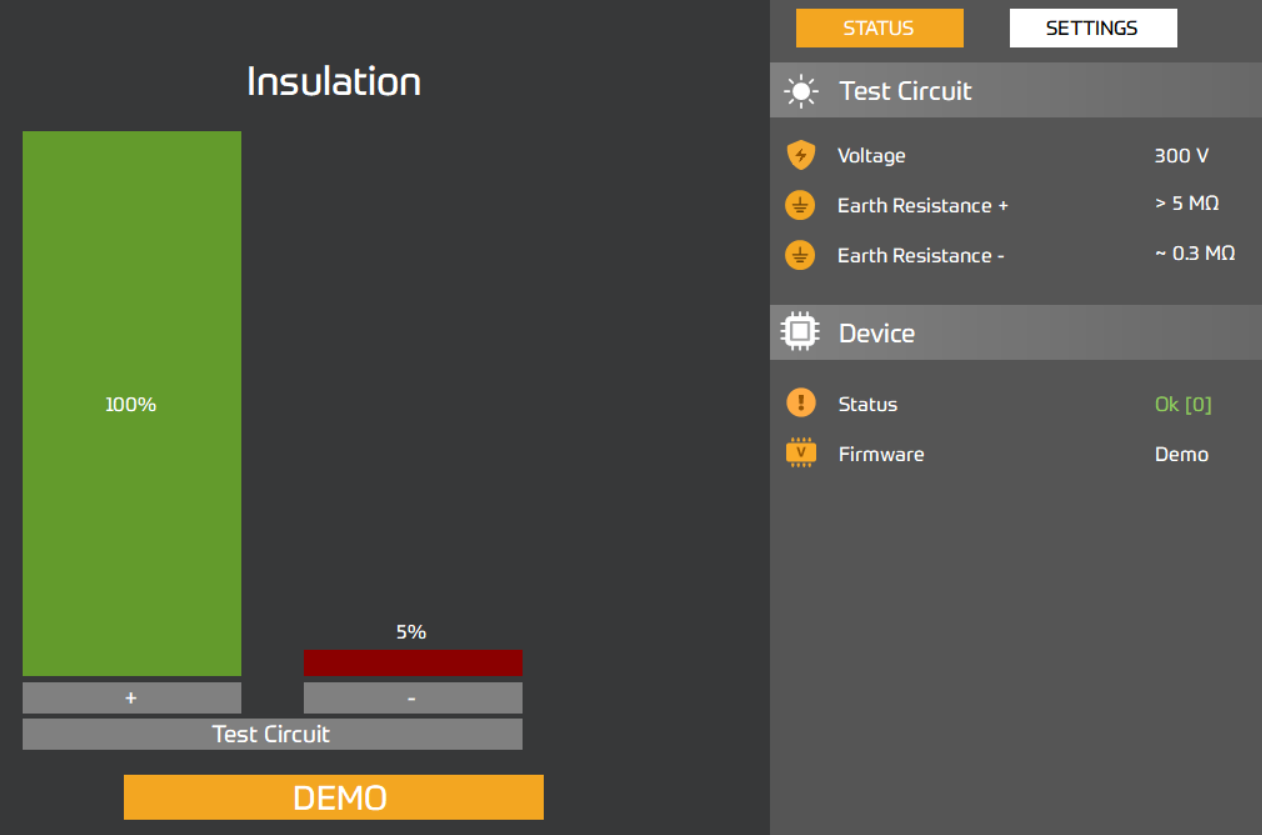
AERL Link shows the circuit voltage and the earth resistance (+ and −) in MΩ, with the device status and firmware version.
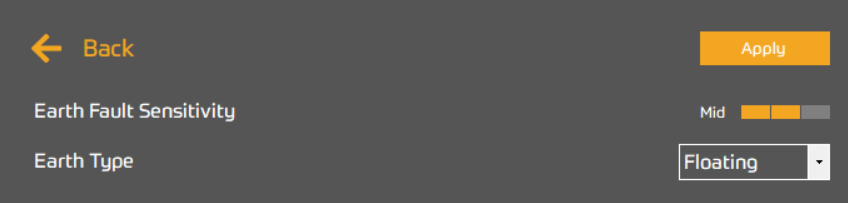
Choose one of three trip sensitivity levels under “Settings” in AERL Link (Figure 3):
The default is Low (30 kΩ).
Set the mode in AERL Link to match how the DC bus is referenced to earth.
| Mode | When to use | Detection behaviour |
|---|---|---|
| Floating (default) | The DC bus is not bonded to earth at any point | Both DC+ and DC− poles are monitored against earth |
| Positive Earth | DC+ is bonded to earth elsewhere in the system | Only DC− is monitored against earth |
| Negative Earth | DC− is bonded to earth elsewhere in the system | Only DC+ is monitored against earth |
Positive Earth and Negative Earth modes disable monitoring on the bonded pole. Use them only when that pole is deliberately and permanently bonded to earth at another point in the installation; otherwise leave the circuit on Floating.
A dry-contact signal relay connects to an external monitor (for example a Victron Venus GX) where the local alarm cannot be heard.
The contact is Normally Open (NO) and energise-to-close (fail-safe): the coil is energised in normal operation, holding the contact closed. On an earth fault or loss of power the coil de-energises and the contact opens, so an earth fault, a power loss and a broken cable all show the external monitor the same open contact.
The EG-600-SC continuously monitors the insulation between each pole of the test circuit and reference earth. When it confirms a fault, it:
The two LEDs on the front panel show the device state:
| All Clear (green) | Fault (red) | Meaning |
|---|---|---|
| Solid on | Off | Normal operation. Insulation resistance is above the configured trip threshold on both poles. |
| Off | Flashing (2 Hz) | Warning. A possible fault has been measured; the unit takes several more readings to confirm it. The relay and buzzer are not yet active. |
| Off | Solid on | Confirmed earth fault. The buzzer sounds and the alarm relay opens (see Remote monitoring). The fault clears automatically once the insulation resistance is back above the trip threshold. |
Once the fault is fixed, the EG-600-SC returns to All Clear.
An earth fault can damage power conversion equipment (PCE) and connected components. Ask the PCE manufacturer before you simulate an earth fault. AERL takes no responsibility for damage caused by simulating an earth fault.
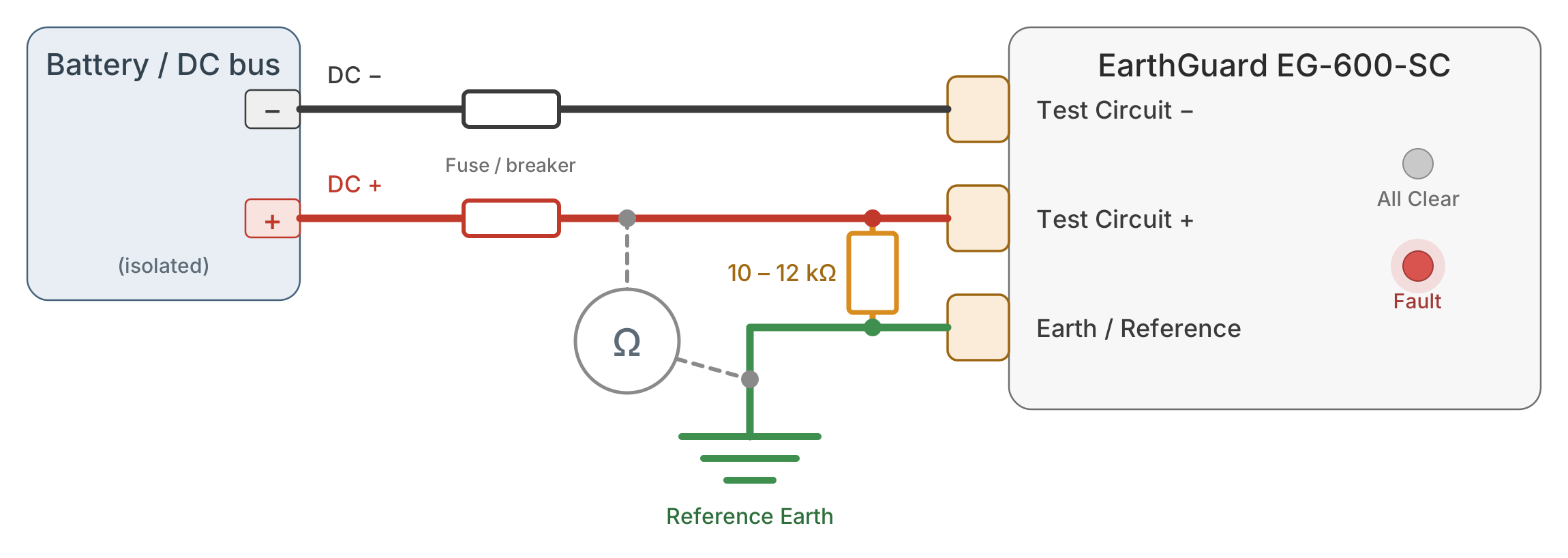
To check that the EG-600-SC is working, follow this procedure with extreme caution.
Any resistance below the trip threshold trips the unit, so 10–12 kΩ trips at all three sensitivity levels (see Trip sensitivity configuration).
If the test still does not trip the EarthGuard, or your installation is not covered here, contact AERL support at [email protected] or on 1800 950 865.
Australian Energy Research Laboratories
1/75 Bluestone Circuit
Seventeen Mile Rocks QLD 4073
Australia