Off-grid cathodic protection
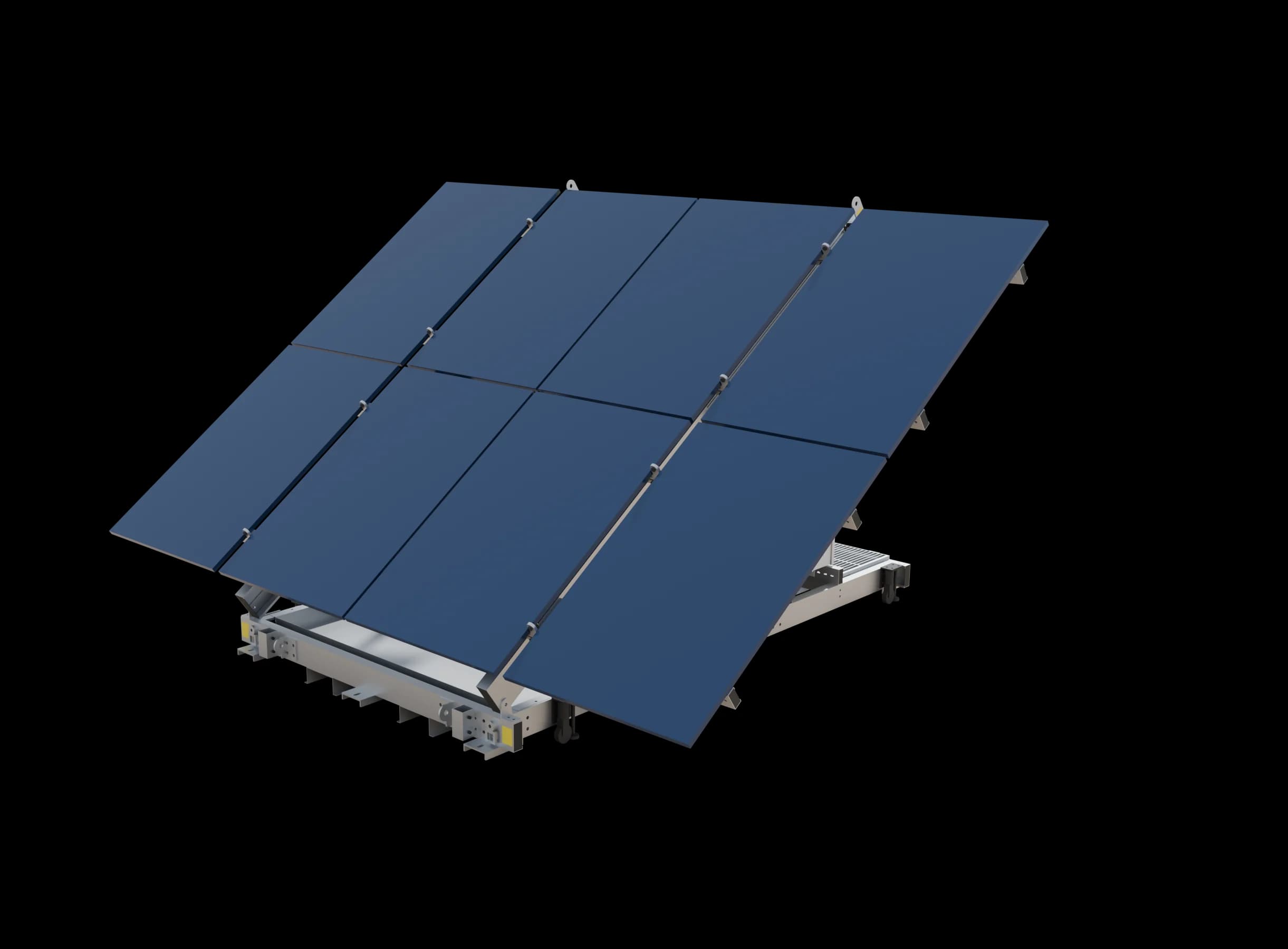
Solar cathodic protection for remote sites
Reliable protection for pipelines, tanks and bores far from the grid, engineered and supported by AERL for the life of the site.
- Since the late 1980s
- designing ICCP converters for off-grid pipelines
- One supplier
- for the controller, solar, storage and monitoring
- Four continents
- of pipeline and corrosion projects
Used by pipeline and energy operators



How a solar ICCP system works
The AERL reference skid puts the solar array, batteries and power electronics on one frame.
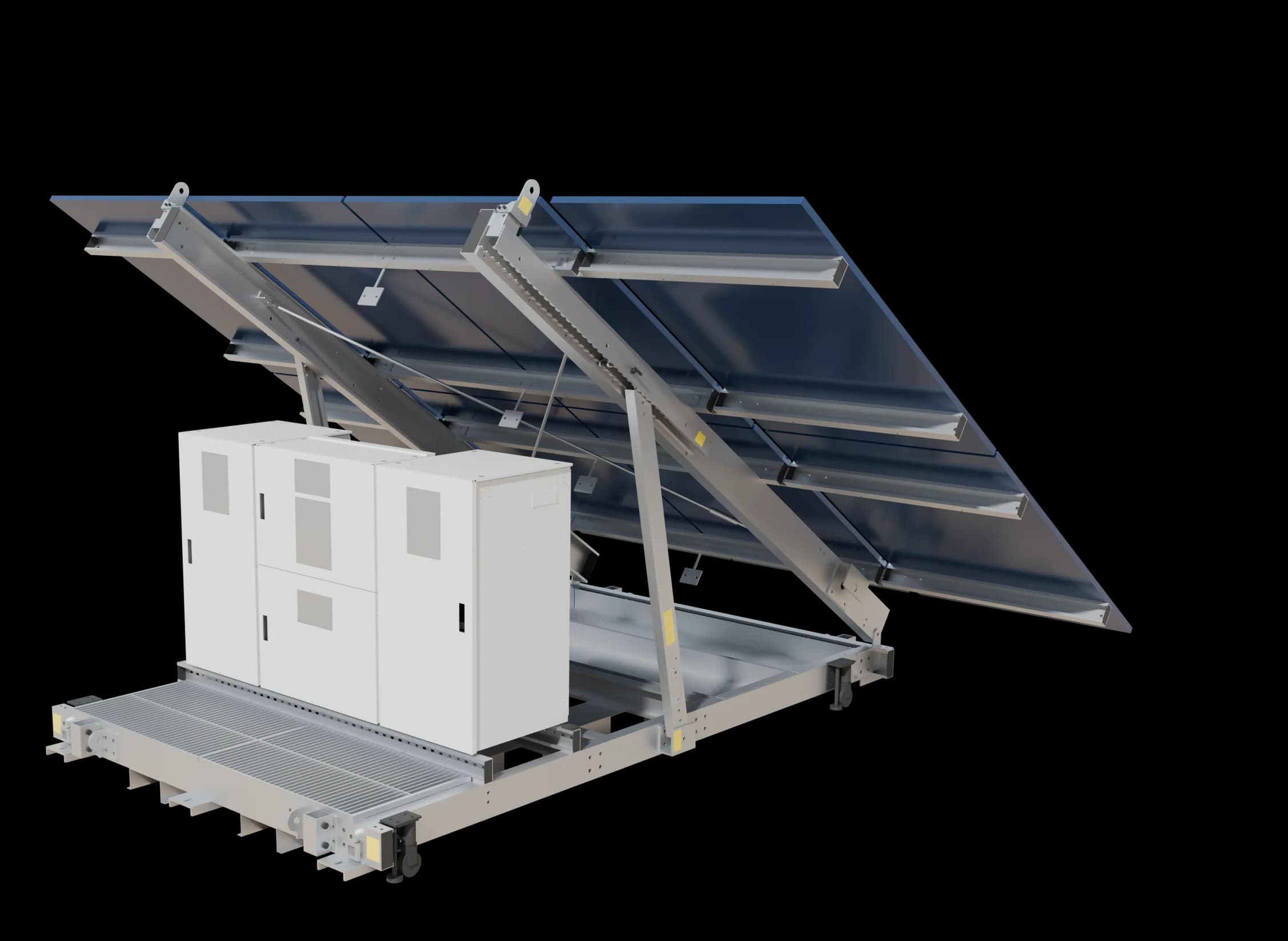
- 1PV array
- 2CoolMax and CoolPro
- 3Battery bays
- 4Reference cell
- 5Protected structure
- 6Anode bed
Why CP engineers specify CoolPro
Built for CP work from the start, and supported directly by the engineers who designed it.
±0.5%
Precise control
Output current holds within ±0.5% across load and temperature. With a reference cell, structure potential holds as the ground wets and dries.
No fans
Fewer site visits
No fans or filters to service. A Nexus Gateway sends output, battery and fault readings to AERL Cloud or your SCADA, with email alerts.
1–2 ms
Survey-ready
A 1–2 ms current interrupt, driven by your interrupter or sequencer, for clean instant-off readings.
IP65
Built for harsh, unattended sites
Sealed, fanless IP65 enclosure with on-board surge protection, and a 50 kA Surge Buster option for long or tall structures.
30 A
Scales with the structure
Up to 30 A per unit, with units in parallel for larger structures.
7 years
Easy to specify, backed for years
Tender-ready specification text, outline drawing and STEP model, with up to 7 years’ warranty.
Protecting remote structures worldwide
CoolPro converters have been supplied to pipeline and corrosion projects around the world.
- Australia
- United States
- Nigeria
- Egypt
- UAE
- Iraq
Oil and gas pipelines
Remote transmission and gathering lines, where AERL’s CP work began.
Water pipelines
Buried steel mains far from grid power.
Wellheads and casings
Casing protection at remote wellfields and bores.
Tanks and vessels
Coated structures, where structure-potential control prevents over-protection.
Size a solar ICCP skid
Estimate the battery and PV array for your site. The CoolPro’s efficiency keeps both small, and AERL engineers confirm every design.
Your site
Protection current × circuit resistance
For the darkest month, from the site’s solar data
Assumptions
Estimated system
- Daily energy
- 3.07 kWh
- 128 W × 24 h
- Battery capacity
- 19.2 kWh
- 400 Ah @ 48 V
- PV array
- 1.17 kW
- 1,170 W
- CoolPro CP30 units
- 1
- 10 A ÷ 30 A
- LiFe² modules (5.12 kWh)
- 4
On a 48 V battery, the CoolPro is rated for −20 to 50 °C ambient.
Send these figures to an engineerPreliminary estimate only. It does not allow for recharging after a run of low-sun days, or for battery temperature and ageing. AERL engineers size the final system for your site.
Everything for a solar CP site, from one supplier
One team stands behind the whole system, from the solar array to the protection current.
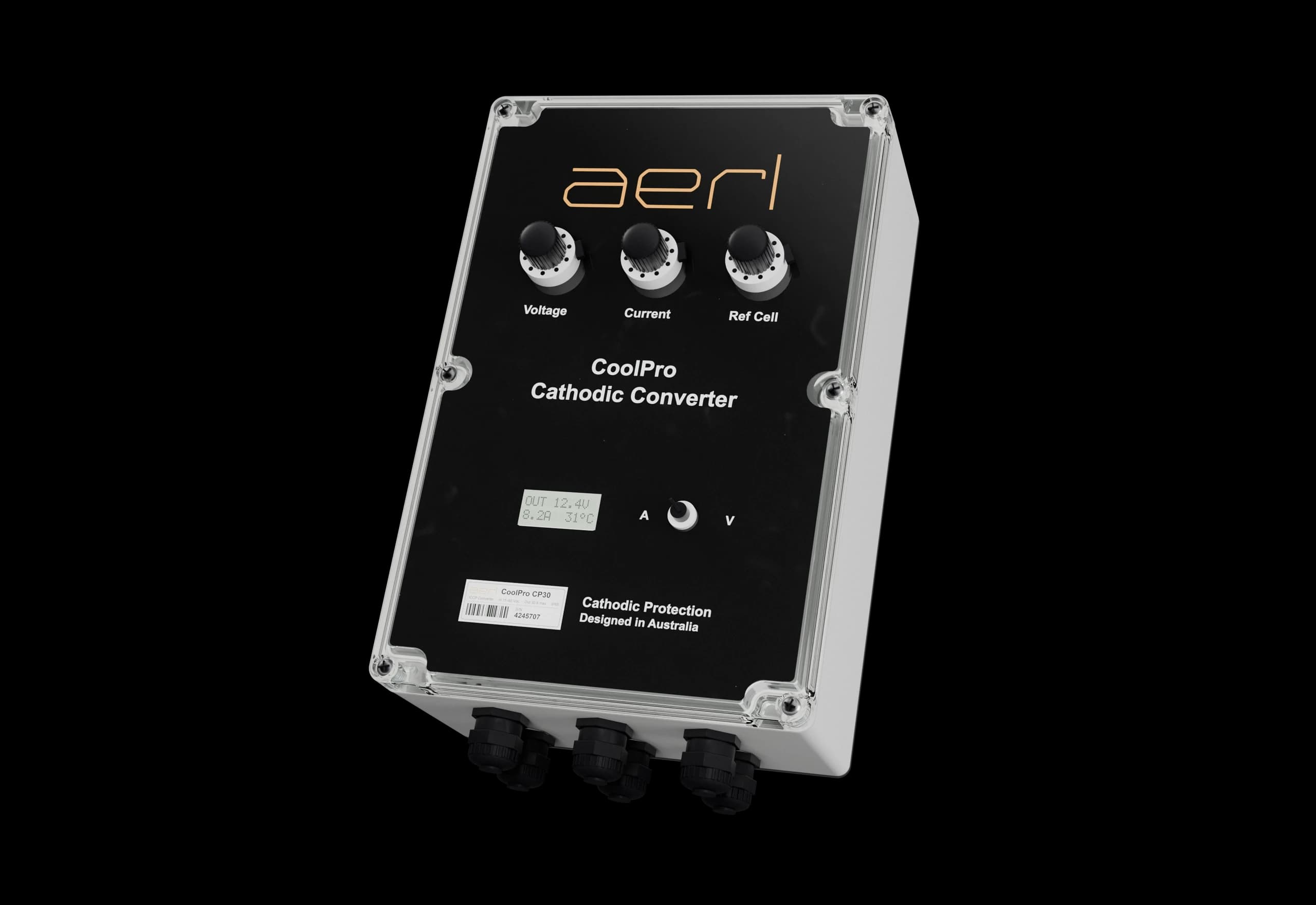
Solar ICCP controller
CoolPro CP30
Turns battery power into a controlled protection current, in constant-current, constant-voltage or structure-potential mode.

Solar charging
CoolMax SRX
MPPT charge controllers with up to 600 V PV input and up to 200% PV oversizing.

Energy storage
LiFe²
5.12 kWh, 48 V LiFePO₄ modules that connect in parallel to carry protection through nights and cloudy days.

Remote monitoring
Nexus Gateway
Sends site readings over 4G or Ethernet to AERL Cloud or your SCADA, with alerts and history for your CP records.
Solar cathodic protection FAQ
What is a solar CP rectifier?
A solar CP rectifier is an impressed current cathodic protection (ICCP) power supply that runs from solar panels and a battery instead of mains AC. In an AERL system, the CoolPro controller drives the protection current, a CoolMax charge controller charges the battery, and the battery carries the load at night.
When is solar ICCP cheaper than running AC to the site?
Solar ICCP is usually cheaper when there is no AC at the site and bringing it in needs a new line, poles or a transformer. The break-even point depends on distance, terrain, protection current and the utility’s connection charges. AERL can compare both options for your site.
How many days of autonomy should I design for?
Design for the longest run of low-sun days expected in the site’s worst month, as set by the asset owner’s design standard. Autonomy sets the battery size, and the PV array must recharge the battery after that run while still carrying the load. AERL sizes both from the site’s location and protection current.
Can the CoolPro run from an existing DC supply?
Yes, from an existing 12, 24, 36 or 48 V battery bank: the CoolPro accepts 11–60 Vdc. Its low-battery cut-out is set for the nominal battery voltage, so ask AERL before using a DC source without a battery.
Does the CoolPro support reference cell control?
Yes. In structure-potential mode, the CoolPro holds the structure potential against a reference cell, over a ±2400 mV range. The current and voltage setpoints then act as limits for abnormal conditions. This mode works with a single unit, not with units in parallel.
How much current can one CoolPro deliver?
Up to 30 A. For larger structures, run units in parallel in constant-current or constant-voltage mode.
What maintenance does the CoolPro need?
Very little: the CoolPro has no fans or filters to service. Routine work is the site’s normal CP survey, checking output current, structure potentials and battery condition. With a Nexus Gateway, readings and alerts arrive remotely between visits.
Which standards apply to solar cathodic protection?
It depends on the structure and the country, not on the controller. ISO 15589-1 covers cathodic protection of on-land pipelines internationally. In Australia, the AS 2832 series applies, including AS 2832.1 for pipes and cables. In the US, AMPP SP0169 (formerly NACE SP0169) covers buried and submerged piping, and regulated pipelines also fall under 49 CFR Parts 192 and 195.
Does the CoolPro need lightning protection?
Only on lightning-prone sites: pipelines or structures longer than 100 m (330 ft) or taller than 10 m (33 ft). There, add the Surge Buster module (50 kA, 8/20 µs) to the CoolPro’s on-board surge protection. Without it, the warranty does not cover lightning damage on these sites.
Talk to an engineer about your site
Tell us about your site, and AERL will help you design the right solar ICCP system for it.